
A practical writing guide
How to plan a novel visually without over-outlining it.
Visual planning is not about making the prettiest board. It is about externalizing enough of the story that your attention can move from remembering every piece to understanding how the pieces affect one another.
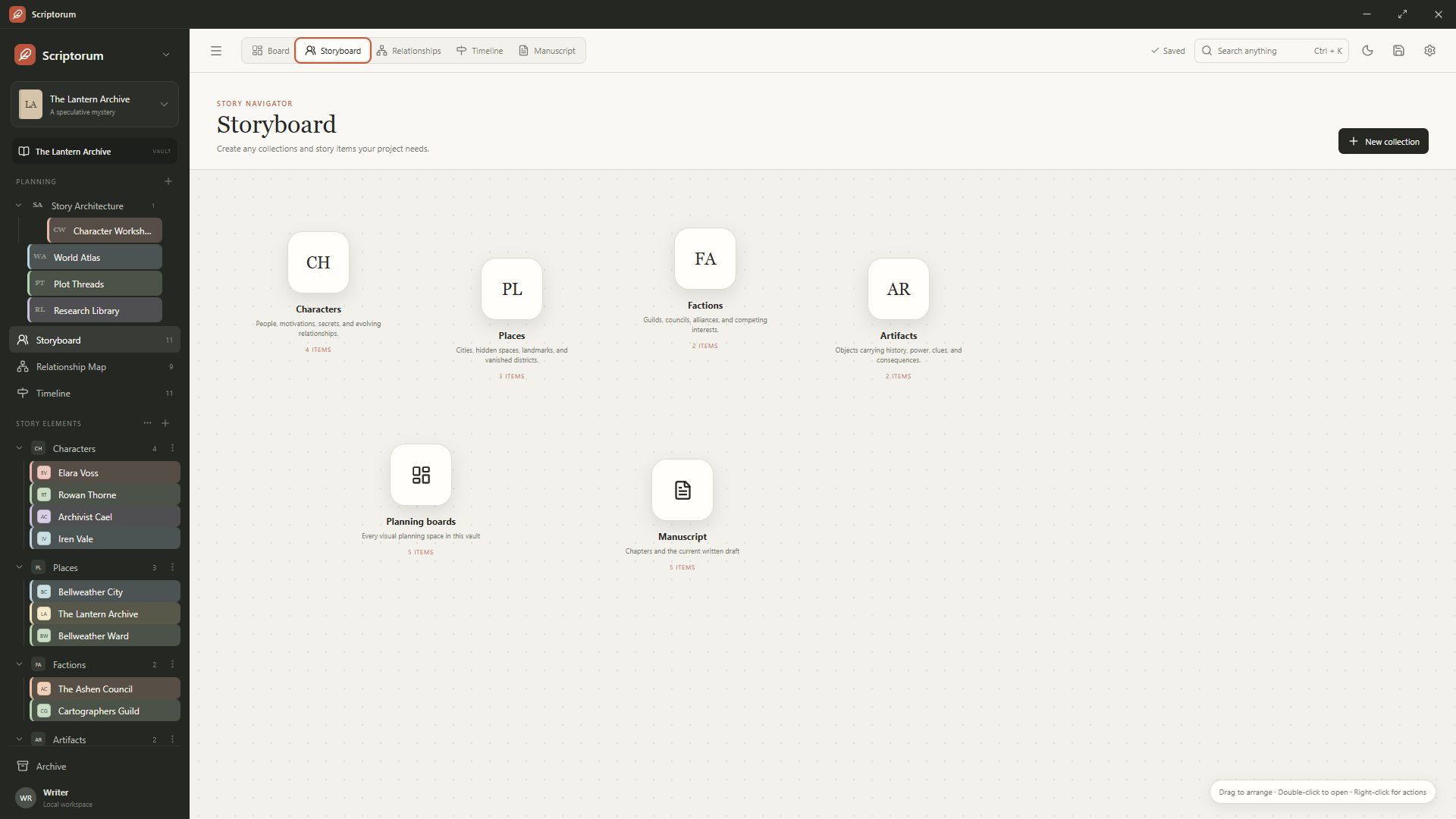
Begin with unresolved material
Create a board for the project and add what already has energy: a scene, an image, a relationship, a question, a piece of research, or a line of dialogue. Do not classify every fragment immediately. Early planning should preserve possibility.
Separate facts from questions. A card that says what you know plays a different role from a card that names a problem the book must solve. Keeping both visible prevents uncertain ideas from quietly becoming accidental canon.
- Capture fragments before sorting
- Name open story questions
- Keep research beside the decision it informs
- Use images only when they clarify
Map pressure, not biography
Create profiles for the characters and story elements that repeatedly affect decisions. Instead of filling every possible field, record the pressures that matter to this book: desire, obligation, leverage, fear, history, and contradiction.
Connect individual people to the places, objects, events, and relationships that create consequences. A relationship map is useful when every line answers a story question—not when it merely proves two entries exist.
Arrange scenes around change
Turn promising fragments into scene cards and place them in a rough reading order. Look for what changes across each scene: knowledge, power, commitment, risk, or emotional distance. If nothing changes, the scene may be atmosphere, research, or material for another moment.
Use timelines when chronology itself creates difficulty. A private history, investigation sequence, or parallel plot can remain separate until you need to see where it intersects the main narrative.
Move into chapters before the plan feels perfect
Planning has done its job when you can choose the next meaningful scene. Begin drafting while some questions remain open, and keep the planning workspace available for discoveries that arrive through prose.
Revision can move in both directions: manuscript discoveries update the profiles and boards, while old planning references help diagnose promises, missing consequences, and forgotten threads.
Common questions
What writers usually ask.
Do I need to outline every chapter before drafting?
No. A visual plan can remain partial. Its purpose is to make the next meaningful decision easier, not eliminate discovery from drafting.
What belongs on a visual story board?
Scenes, questions, research, images, quotations, character pressures, plot promises, and anything else that becomes easier to understand when placed beside related material.